Wichita State Varsity Esports requested a special meeting with the Student Government Association’s finance commission on Friday ahead of the student fee hearings, which begin SGA’s process of deciding how to allocate funding to various campus entities.
Student fee entities get 15 minutes to present their organization’s need for funding, then there is a 15-minute Q&A period. The presenting entity will typically cover how it functions and spends its money, and then requests funding based on specific needs provided in the presentation. The meeting held on Friday lasted 25 minutes.
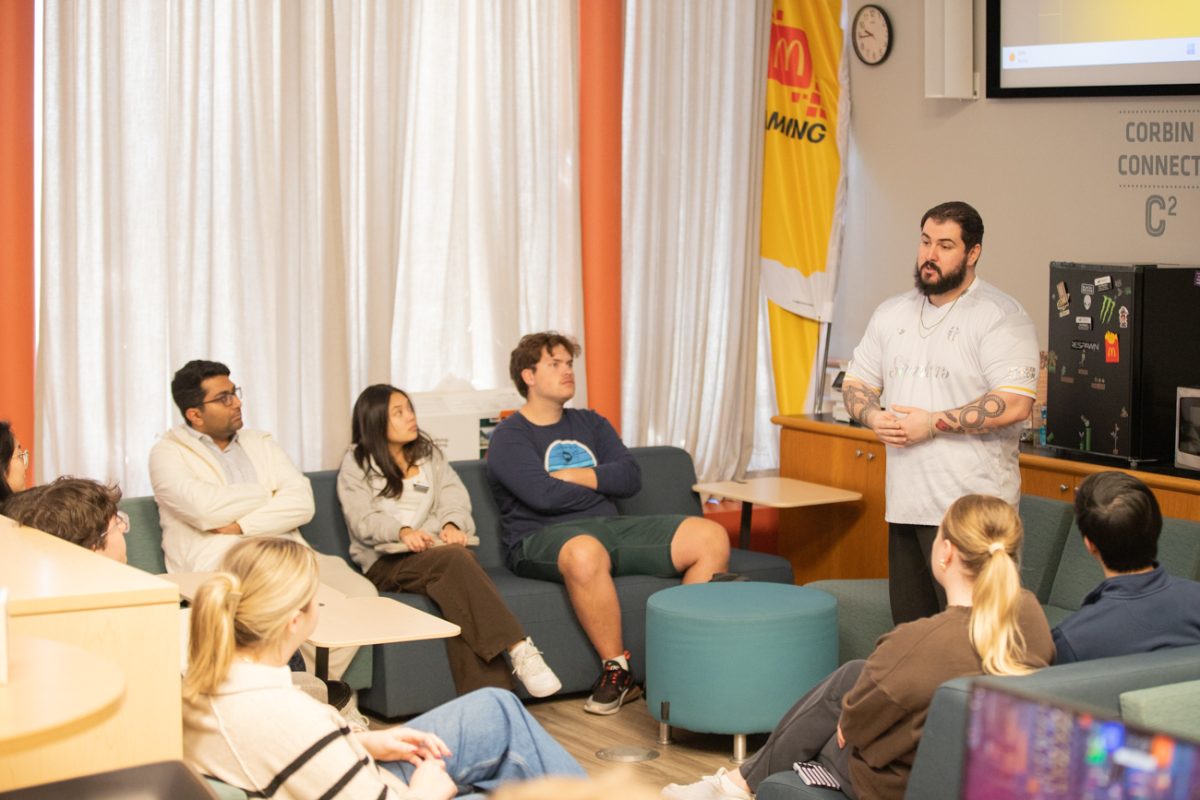
“I’ve gone through (the student fees) process as an assistant director and as a director,” esports director Joseph Mazzara said. “Most of our time — which is very limited in a budget hearing — talks about what we do… So this is really just an opportunity to just get ahead of that and make our hearing a little bit more about the topic at hand and illustrate what our need is.”
Mazzara said he requested the meeting because of the quick turnover in SGA, hoping to use the time to explain what the team does.
“It’s really a mixed bag whether people know what esports is or not,” Mazzara said. “We spend a lot of time on our proposal talking about what we do and informing people.”
Past funding in esports
The money esports gets from student fees is split between two funds: esports scholarships and varsity esports. In fiscal year 2024, esports received $25,000 for its scholarship fund and around $150,000 for its varsity team.
In 2025, esports received $10,000 of its $95,000 request for its scholarship fund and $40,000 of its requested $155,440 for its varsity team.
“This program is technically profitable from student fees, just by headcount,” Mazzara said.
WSU’s student fee breakdown, which details where student fees are typically allocated, does not include how much is typically allocated to the varsity esports team.
According to fall 2024 full-time equivalent enrollment and last year’s SGA student fee budget of $10.9 million, a 12-hour student contributed about $748 on average. This means that esports’ 62-player team contributed about $46,390 to the student fee budget last year.
Based on these approximations, the team brought in about $128,600 less than it was allocated in FY2024, including both the varsity team fund and scholarship fund. With last year’s budget shortfall and funding cuts, based on average headcount, the team brought in $3,600 less than its FY2025 allocations.
Effects of last year’s shortfall
Mazzara said that the biggest hit to the varsity esports team following last year’s school-wide student fee shortfall of $900,000 was the team’s ability to travel.
After the finance commission formulates a recommended budget, it submits that recommendation to the Student Senate for approval. Last year, representatives of esports and other groups attended the senate’s meeting — where it would vote on the initial allocations of student fees for FY2026 — and requested more money.
“We’ve had students in our program where we are the reason they’ve been on a plane for the first time,” Mazzara told the Senate at that meeting. “We just took a team to Myrtle Beach for a Rocket League competition, and that was the first time one of our students got to see the ocean. Travel is a huge transformational opportunity for those students.”
Mazzara said that this year the esports team has had to turn down trips to competitions in Myrtle Beach and at Michigan State.
Recently, when the esports team hosted around 100 high school students to tour the esports space, the program was unable to provide food to the visitors.
“We couldn’t feed them,” Kenzie Kessler, the team’s program manager, said. “For the amount of people that are interested in the program, we can’t keep up with the demand … to put on events.”