The way in which universities benefit their communities were discussed during the Kansas Board of Regents meeting on Wednesday.
KBOR oversees all the public higher education institutions in Kansas. There are nine members on the governing board, who are appointed by the governor. Once a month, administration from all public colleges and universities must report on their institutions’ current state.
During the Mar. 11 meeting, KBOR looked into Pillar III of its “strategic plan for the state’s higher education system” and the ways the three research universities in Kansas — Wichita State, Kansas State University and University of Kansas — benefit the economy and retain students in Kansas communities.
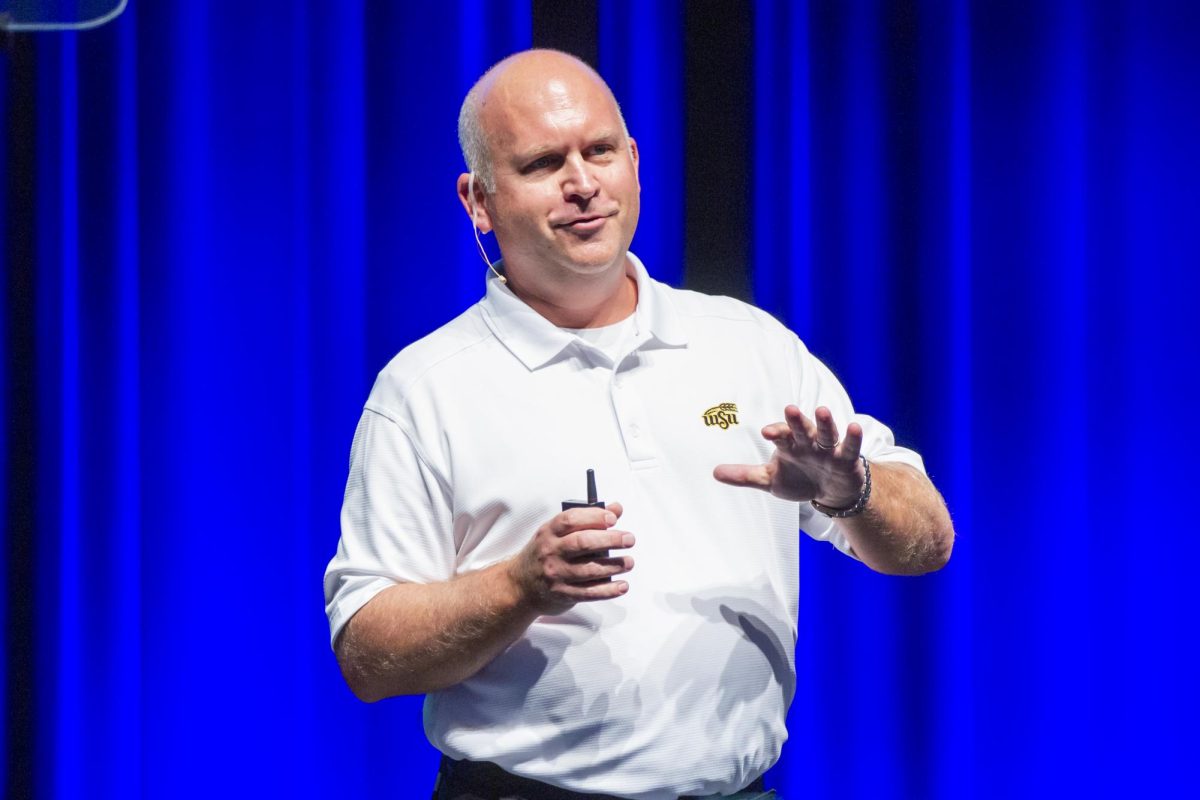
John Tomblin, director of the National Institute of Aviation Research, gave the report for WSU. 13,000 students collectively earned about $40 million through applied learning, according to Tomblin.
“They come to WSU, and they don’t only get a degree, but … they get a resume too,” Tomblin said. “So with that resume, then we can hopefully keep them in Kansas. That’s the primary goal.”
With the continued development of NIAR and changes within the aerospace industry, Tomblin said there have been 2600 new jobs from 2019 to 2021 from NIAR and Innovation Campus, which offers research facilities and industry partnerships. In fiscal year 2025, the WSU’s engineering research and development expenditures totaled $475.5 million, but it brought in about $630 million in grants.
“The key to our success is the applied learning and our internships,” Tomblin said.
WSU was ranked ninth overall in engineering research and development and first for aerospace by the National Science Foundation. WSU was also ranked fourth in engineering for the Department of Defense, and Tomblin said he thinks WSU will eventually be the number one DoD-ranked university.
NIAR currently has a program through which 650 undergraduate students are working under a U.S. Air Force’s Survivable Airborne Operations Center contract. Engineering students also have the opportunity to work in any of four long-term programs that involve making parts for bomber fleets, and they are projected to bring in about $2.5 billion over the next 10 years, according to Tomblin.
“We don’t normally see this kind of workforce working for the DoD, and they’re students,” Tomblin said about the 650 students.
Tomblin also highlighted Wichita’s Biomedical Campus, opening in the spring of 2027, and the Bureau of Alcohol, Tobacco, Firearms and Explosives’ laboratory on WSU’s campus.
“I think all of you have seen what we do with the Innovation Campus,” Tomblin said about the biomedical campus. “It was so successful at attracting industry, why don’t we just take the same recipe and do it again… we’re just going to build companies around the biomedical infrastructure and just place it right in town.”