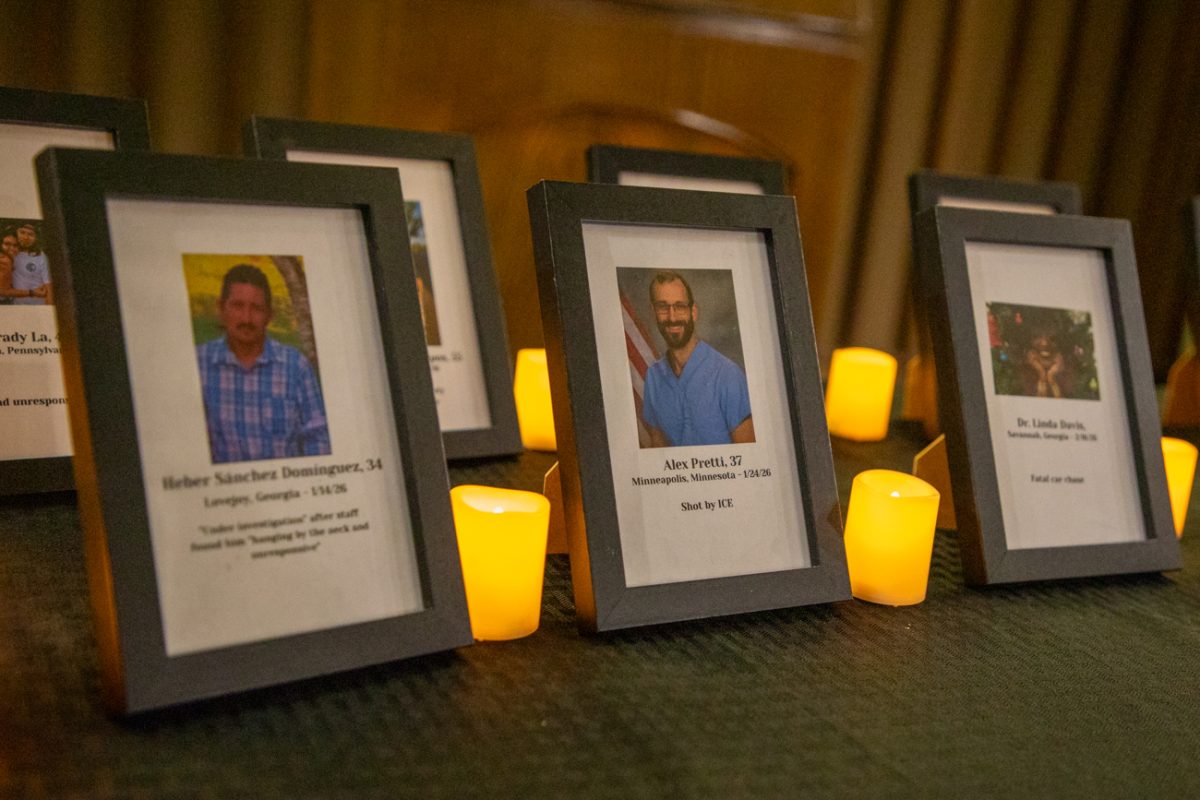
Since the beginning of 2026, there have been over 15 people who have been killed by Immigration and Customs Enforcement, or have died while in ICE custody.
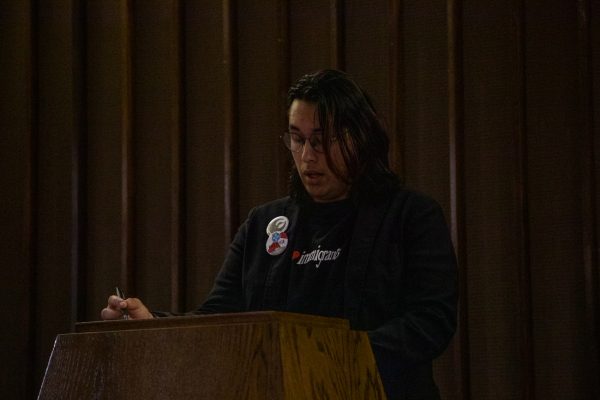
On April 1, Wichita State’s Shocker Organization for LGBTQIA+ Research and Advocacy held a vigil for the victims of ICE violence. At the vigil, Ruby Godsey, the president of SOLAR, opened the vigil with a statement about difficulties around dealing and coping with ICE violence.
“There is no easy way to go about acknowledging the previous actions of ICE under the current administration,” Godsey said. “The United States is a country founded by and upon immigrants. However, violence against immigrants and people of color is nothing new.
“Solidarity is not merely a moral obligation, but also a practical one.”
She went on to say that despite the discomfort these topics bring, it is important for people to have a safe space to sit with their grief and fears.
“It’s uncomfortable to sit with the painful truth that ICE officers are essentially hunting down people of color and immigrants and anyone who is brave enough to speak out against those gross injustices,” she said. “I believe that it is very important that we sit with that uncomfortable feeling and confront the systemic injustices that have gotten us to this point in the country.”
Godsey then took a moment to read the names of people who had been killed by ICE or died in ICE facilities.
The chapel then took a moment of silence for the people killed, and Godsey encouraged people to sit as long as they needed to process their grief.
Attendees of the vigil stressed the importance of showing up for the community in order to show their strength.
“We need to show that our community is not what they’re saying it is,” Merry Mendoza, a Wichita State sophomore, said. “It’s showing up for my people, for my community, no matter (what little) impact.”
Josie Medina, a freshman at the university, said that showing up to vigils like these is important to show that “other people are here for you as well.”
Attendees said they were thinking about the people around them who have been impacted by fears of ICE raids and violence in the community.
“I was praying … for my family, for my friends, for me, for anyone,” Mendoza said.
Mariah Smith, a freshman who attended the vigil, stressed the importance of attending awareness events like this for the communities to stick together.
“As a woman of color, it’s very important to me to sit with those who are also of color because I understand what it’s like to have this happen … It’s very important to stick together as communities, regardless of what your race or color is,” Smith said.
To Arizvel Tavarez, a freshman, campus hosted vigils show her that people on campus care about political issues that impact every community.
“It shows that there’s people who care, especially where there (were) other events here that didn’t really make sense for them to be here or for them to be happening,” Taverez said. “… with such a big attendance for something that didn’t really make sense and something smaller for something that’s so important.”
Genesis Merriett, president of WSU’s Spectrum: LGBTQ+ & Allies, challenged people who attended the vigil to not let attending be their only “good deed” of the day.
“I want this vigil to serve as a space for grief, support and community for those who need it,” Merriett said. “I also want this vigil to serve as a call to action, don’t let your attendance to this vigil count as your good deed … I call on you to continue showing up, to contact your representatives.”