Championships aren’t won in March; they are forged during random days in June and July.
Those summer workouts, held in empty gyms and quiet weight rooms, build the conditioning, chemistry and trust that shape a season months before the first tipoff.
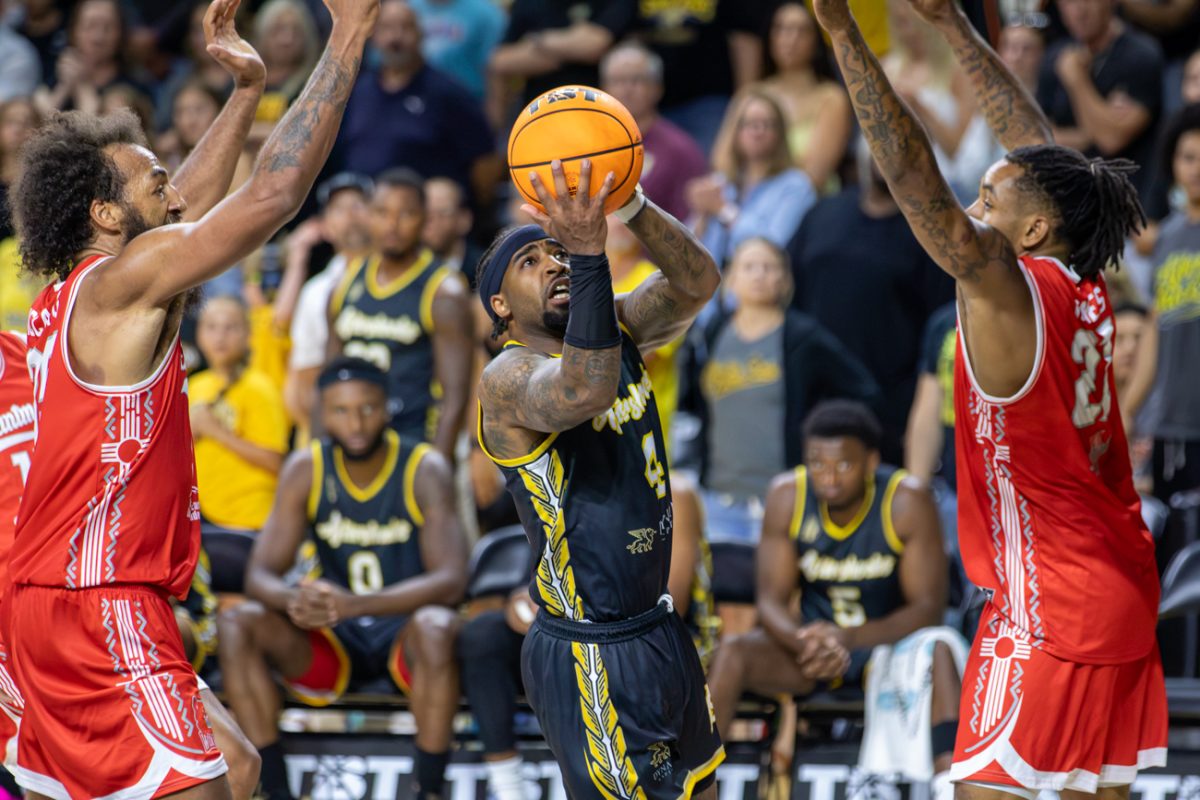
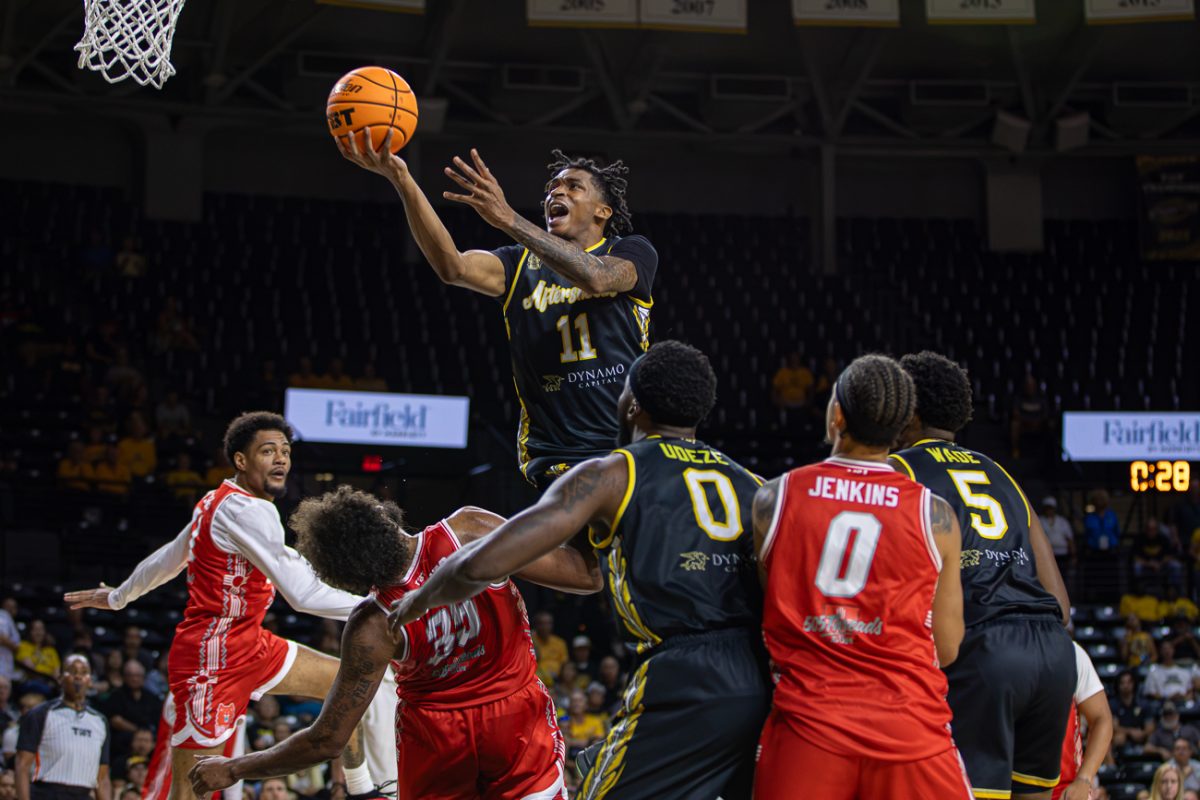
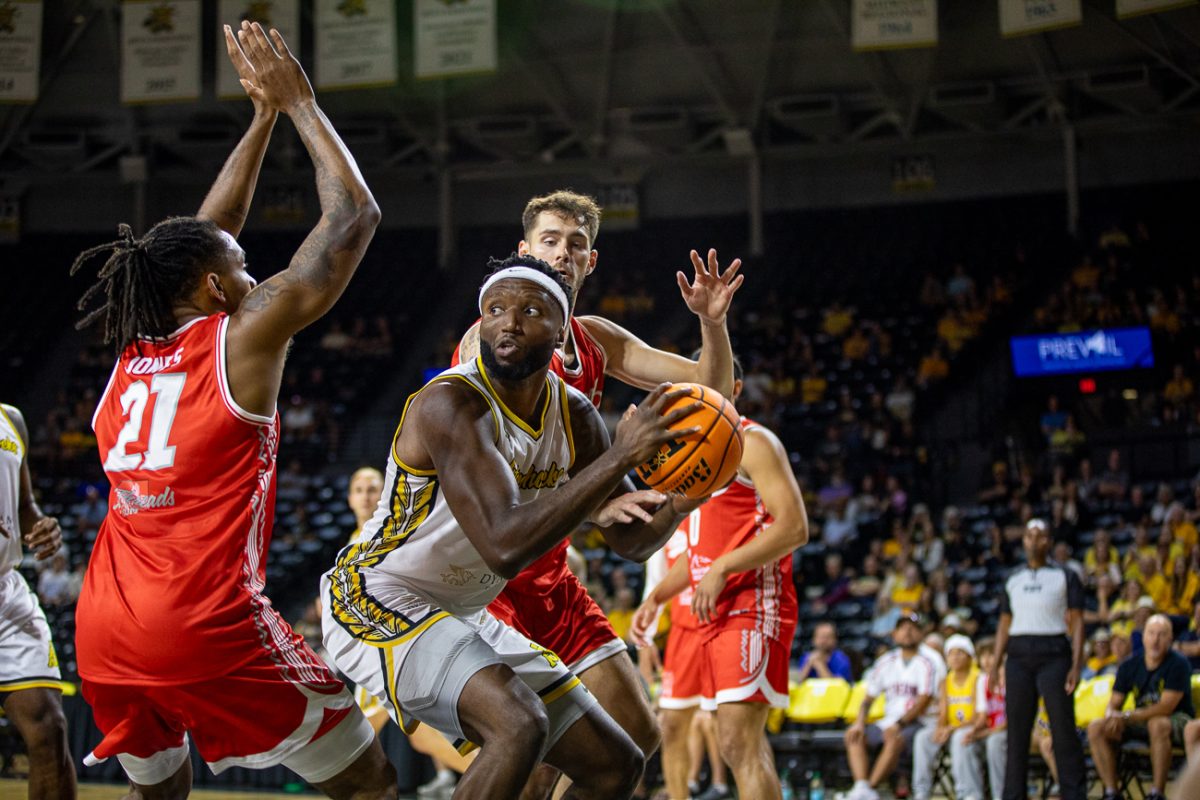
Wichita State seniors Karon Boyd, Kenyon Giles, and Emmanuel Okorafor have ensured those foundational connections are in place.
For a team with 12 newcomers, it would have been easy to struggle with cohesion. The Shockers have throughout periods this season. But now, they control their own destiny in Saturday’s 3 p.m. game against Florida Atlantic on senior day at Koch Arena for the league’s No. 2 seed headed into the conference tournament.
The three seniors have played a helping hand in Wichita State’s rise to where it’s at now.
Boyd has been the Shockers’ steady leader since those early summer days. Head coach Paul Mills recalls Boyd introducing himself and asking for everyone’s name as soon as the team’s text group chat was created. Giles’ infectious confidence to play freely has rubbed off on others, while Okorafor’s hunger to improve has elevated the standard.
“Good teammates make the tentative bold,” Mills said. “You come in with a lot of kids who are really uncertain. Those three haven’t been.”
This year’s senior class, and the group of new faces, have also succeeded in rebuilding a decades-long relationship with fans at Koch Arena — a bond that had nearly been lost in the new era of college athletics.
Boyd, Giles, and Okorafor have only been at the Roundhouse for one season, but they arrived at a crucial moment when that bond between team and fans still feels possible in an era that often resembles a revolving door.
Leadership, confidence, and an eagerness to raise the bar — these shared qualities define the team as they vie for a triple-bye at the American Athletic Conference Championship next week. But to truly understand their current impact, one must understand the seniors’ paths to the Roundhouse.
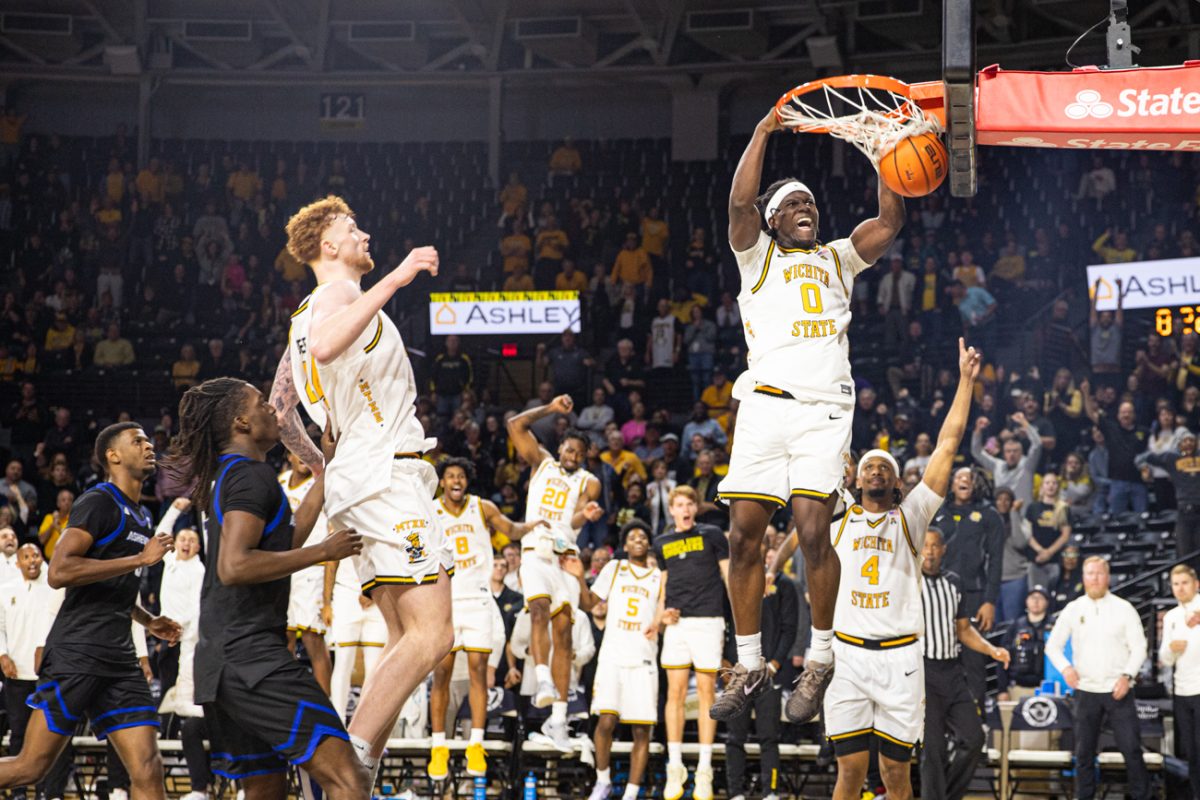
Karon Boyd: A late bloomer
Boyd’s basketball career began later than most, starting in his ninth-grade year. He previously played running back and wide receiver in football, but that passion waned as his desire to play on the hardwood grew stronger.
Fans have come to know the 6-foot-6 forward for his defensive capabilities — a skillset Boyd focused on to reach the next level.
“Obviously, (having) a late start, my skills aren’t as developed as everybody else,” Boyd said. “So, the best way for me to get on the floor was defensive rebound. I stuck with that, made it my strength, and executed it.”
As a senior at Concord High School in North Carolina, Boyd averaged 14.2 points and 12.1 rebounds per game, leading the team to a state championship. Despite his success, offers were scarce, and Boyd began his collegiate career at Division II USC Aiken. After entering the transfer portal, he landed at East Tennessee State, where he earned South Conference Defensive Player of the Year as a junior.
His defensive skillset was undeniable, but his offense lagged. In two seasons with the Buccaneers, Boyd made just 21-of-110 three-pointers and averaged 7.7 points a game.
Since transferring to Wichita State, however, Boyd has become a respected two-way player. He has already made 13 more three-pointers this season than he did in his two years at ETSU combined.
“There were aspects of his game that we really thought we could tap into,” Mills said. “To Karon’s credit, to our staff’s credit, there was a lot of shot-making that he was committed to doing.
“And he’s become a quality decision maker. So, there’s just been an expansion of his game.”
Boyd’s journey — from a late start in high school to the Division II ranks, to expanding his role from defensive specialist, to a two-way attacker — proves that the path to success doesn’t matter when it’s started.
Kenyon Giles: The record-setting sharp-shooter
Giles has heard the criticism everywhere: “You’re too small.”
He stands 5-foot-10 but often plays the game like he’s two feet taller, learning to create shots in even the slimmest spaces.
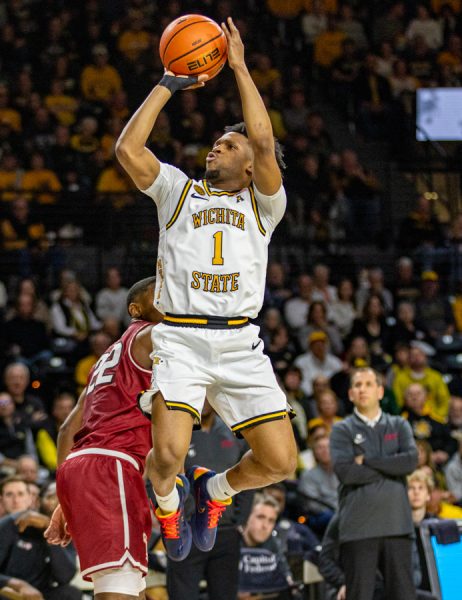
“The disrespect is everywhere,” Giles said. “But I just told myself to not really pay any mind — just focus on people that believe in me.”
The biggest support has come from his family — his mom, dad, and three brothers — who have stood by him through shooting slumps and losing streaks. Giles maintains he “wouldn’t be here without that.”
Their support has allowed him to move past negative comments and focus on what matters most: notching another win.
“The joy doesn’t come from hate,” Giles said. “My joy comes from staying around people where I’m celebrated.”
Giles has given more than just his family reason to celebrate this season. Arriving from UNC Greensboro as a much-needed shot maker, he has solidified himself as one of Wichita State’s most impactful additions from the transfer portal.
He recently set the single-season 3-point record last Sunday against Texas-San Antonio and has averaged 19.5 points per game. Mills has undoubtedly granted Giles the green light, and then some.
But with every high comes a low. During his sophomore season at Radford, the Highlanders finished below .500 — the only season of his collegiate career with a losing record. Giles called it a tough time but credits his family’s words for keeping him level-headed.
“You understand basketball, it’s a fluctuating game,” Giles said. “You have these big jumps, big dips, so staying even keeled helps you stay in the flow.”
His record-setting season at Wichita State is not just a statistical achievement, but a definitive response to those who doubted him.
By staying “even keeled” through the game’s inevitable turns, Giles embodies the resilience that has defined his career.
Emmanuel Okorafor: Driven by growth and adversity
Okorafor, a 6-foot-10 center, began playing basketball in his hometown of Abia, Nigeria, just eight years ago. However, it wasn’t until he had growth spurts around the age of 14 that he started taking the sport seriously.
Inspired by NBA star Giannis Antetokounmpo, who is of Greek and Nigerian descent, Okorafor developed a passion for the game. His talent later caught the eye of scouts at the NBA Academy Africa, where he would later attend.
“When I was at the academy, it was just a leap for my love of the game,” Okorafor said. “And just what the game brings, like adversity.
“It shows you how to be tough, how to handle adversity. You have to handle tough times, and that’s what I like.”
Mills and associate head coach Kenton Paulino initially scouted while Okorafor was at NBA Academy Africa. He wound up committing to Louisville, but playing time was limited during his two seasons as a Cardinal. He then transferred to Seton Hall, where the situation, was similar before ultimately coming to Wichita State.
“We were aware of his talent and just didn’t do much from a production standpoint at Louisville or Seton Hall,” Mills said. “You were a little unsure about what his capabilities were, and it took all of a week to realize that this was a really good decision for him and for us.”
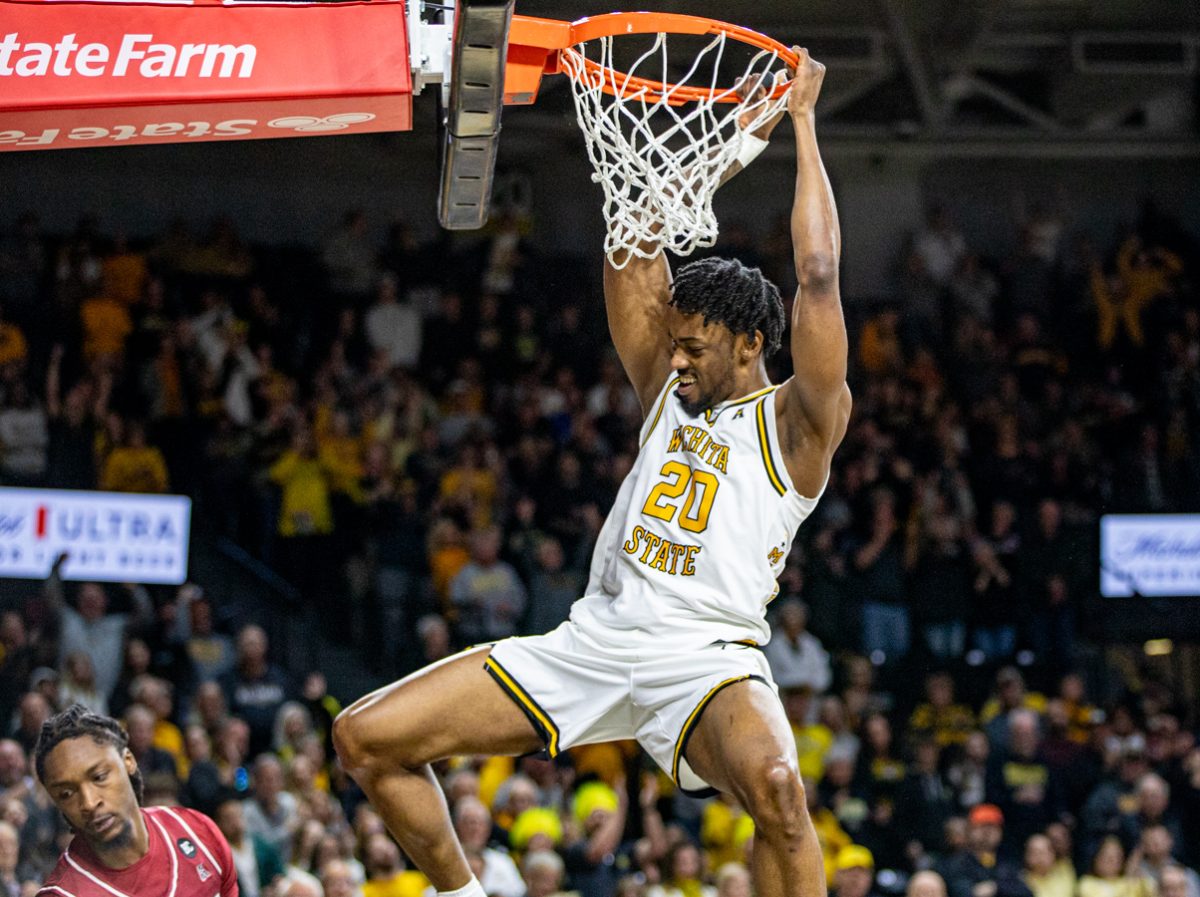
After early-season struggles, including foul trouble and stamina issues, Okorafor has successfully translated his potential into on-court production, earning a starting spot in the last 20 games for the Shockers.
He is averaging 6.3 points per game, nearly double the 3.2 he averaged across his previous three seasons.
His biggest impact rarely shows up in the box score. Okorafor excels defensively, altering and denying shots before opponents get a clean look.
For Okorafor, he said ending his collegiate career in the arena he was once recruited to play in while still overseas has been a full-circle experience.
“I’m glad I’m here right now, and it actually worked out,” he said.
The work that began in empty gyms last summer now echoes inside Koch Arena — and the seniors who started it are a part of the push.