This has not been an easy year for the American aviation industry, which isn’t a new sentiment.
As Wichitans, we are intimately familiar with this issue. Our city is often referred to as the “Air Capital of the World,” a nod to its historic leadership in aviation manufacturing. Aviation is a major source of jobs in Wichita, with Spirit AeroSystems — Wichita’s top employer — employing 13,000 people alone.
The industry at large has faced increased scrutiny as of late due to several shortcomings, such as extended wait times in airports after temporary funding for the Department of Homeland Security expired in February, leading to the majority of Transportation Security Administration and U.S. Customs and Border Protection employees to work without pay, and some to quit.
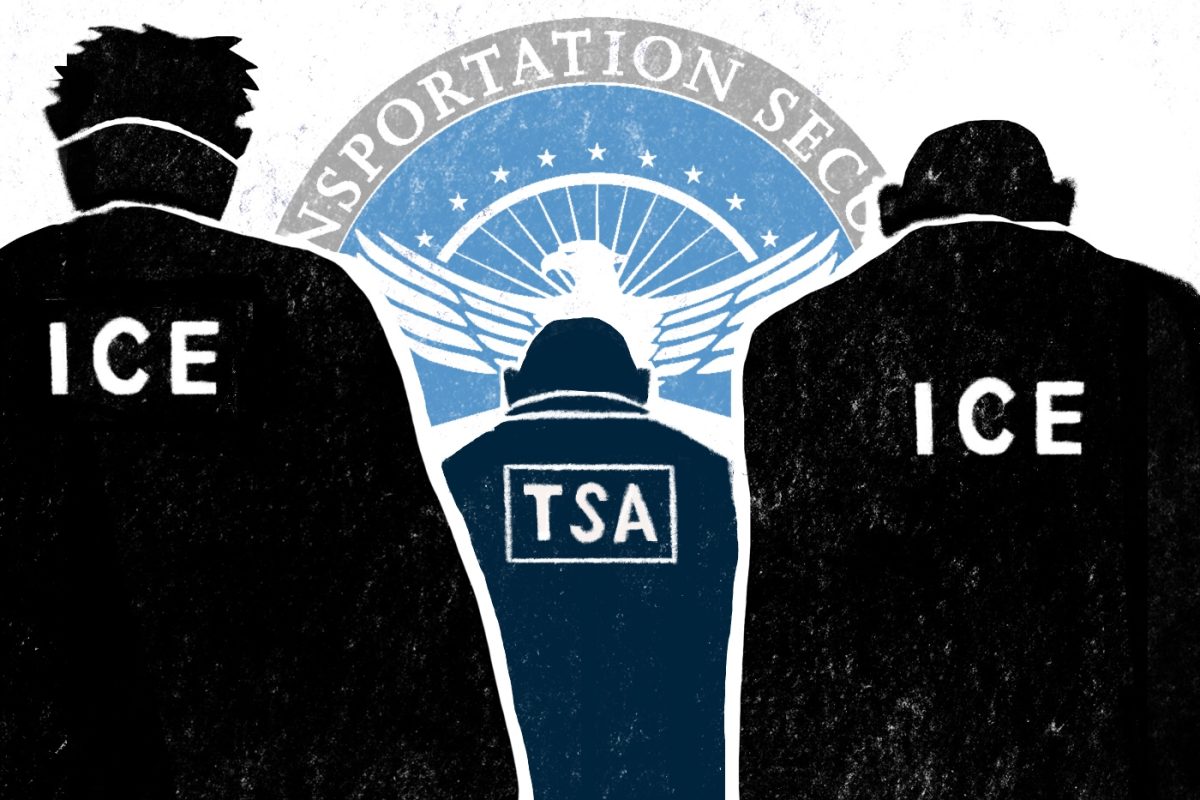
On March 23, ICE agents were deployed to 14 U.S. airports to aid in managing delays. Since then, a number of those airports have seen a complete withdrawal of agents as the need for them has decreased.
The ICE agents assigned to airports are not fulfilling the specialized tasks that TSA is trained to do. The majority of their security tasks are simpler tasks that save time for TSA agents and only require a brief training — like checking IDs, helping with crowd control and security.
But, going beyond the specialized training for the role, there is a difference in trust that TSA holds versus ICE. How effective can a group tasked mainly with crowd-control responsibilities be if the crowd is unsettled by its presence?
Kansas TSA agent Amy Streit said she’s concerned about the atmosphere and security in airports with ICE deployment.
Streit works at a small regional airport in Hays, KS. There are two commercial flights through United Airlines that she and her colleagues serve as security for.
Neither the Hays airport nor Wichita’s Eisenhower had ICE directed to them.
“I can’t really comment where I haven’t seen it in person, but I myself wouldn’t feel comfortable with ICE being present in our airport,” Streit said. “With other ICE-involved situations lately, I don’t think they bring a feeling of comfort or safety.”
Within the Wichita community and across the country ,we have seen pushback to ICE operations.
On April 1, the Shocker Organization for LGBTQIA+ Research and Advocacy held a vigil for the victims of ICE-related violence.
Earlier on March 28, people around the country came out for the third round of national “No Kings” protests. In Wichita alone, over 3,500 people attended marches and rallies to reject various actions of the current administration, with many signs and chants featuring anti-ICE messaging.
ICE deployment to airports cannot make up for TSA staff shortages, nor does it imbue a sense of security in airport employees or travelers. The whole action feels like a poorly sized band-aid to an industry that needs impactful reinforcement.
President Donald Trump signed an executive order for TSA employees to begin receiving back pay on March 27, four days after ICE agents were deployed.
Streit noted that the relief of the first portion of back-pay does not outweigh long-term concerns.
“I think there have been several decent ways to fund [TSA] proposed, and they have been denied or rejected as more of a political statement or withholding to get what each side wants,” Streit said.
Her airport, due to its smaller size, has seen fewer changes than larger airports that are burdened with heavier workloads. This does not mean it has gone untouched.
“You can tell everyone has been more stressed out. Luckily, it has not affected our staffing. We haven’t lost any employees or had a big increase of call-ins,” Streit said.
A majority of their employees are married or part-time, Streit said, allowing them other avenues of income in the pay lapse.
Unfortunately, this is not a shared experience for much of TSA. TSA has lost more than 460 employees since February.
Many employees are unable to go to work, instead having to seek work elsewhere to pay bills and everyday costs that cannot rely on paychecks with no effective date.
On top of TSA shouldering the cost, many travelers are facing extended wait times due to low staffing. CNN currently runs a live tracker monitoring wait times in select major airports.
This situation will not go away overnight. If the Department of Homeland Security were to be funded tomorrow, we would still expect delays due to mass departures from TSA. And if all of those jobs were to be replaced? Those trainees could hardly be expected to meet the same level of competency their predecessors had held right away.
With the state of TSA at the moment and the broader aviation industry, it may be some time before we see meaningful change.
TSA agents and other airport staff have faced criticism due to conditions largely outside of their control, and I believe that is incredibly unfortunate. It is important when issues like this arise to not just acknowledge it is happening but be aware of why.
However I urge you not to forget the very real and integral people who ensure that life can continue running on the ground and in the air.